Smart Campus Energy Lab (SCEL)
In 2012, the University of Hawaii at Manoa (UHM) paid $35 million for electricity, highlighting the need for energy efficiency improvements. To address this concern and align with Hawaii’s Renewable Portfolio Standard (RPS) goal of reaching 100% renewable energy by 2045, the Smart Energy Campus Lab (SCEL) is developing a wireless environmental sensor network to collect data on various weather characteristics across the UHM campus.
The existing sensor network is limited by its range, restricting flexibility in sensor module deployment. To overcome this limitation, Bumblebee, the second-generation communications module, was designed to relay data collected by other sensor modules. Team Bumblebee’s goal is to design a relay node that significantly extends the coverage of the current sensor network.
I am a member of SCEL’s Team Bumblebee as part of fulfilling my Engineering X96 requirements. During ECE 296, I completed tutorials and was introduced to SCEL’s various teams. In ECE 396 and 496, I actively contributed to Team Bumblebee, which focused on relay communication. Our responsibilities included establishing and maintaining wireless connections between the hardware team’s sensor boards.
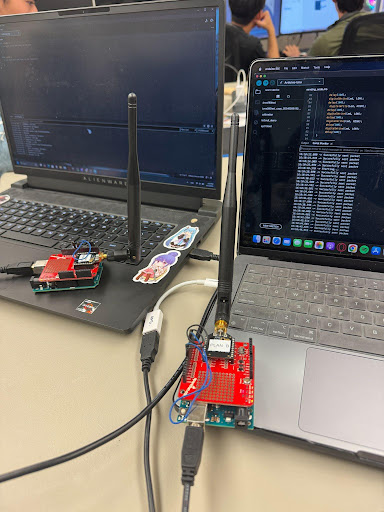
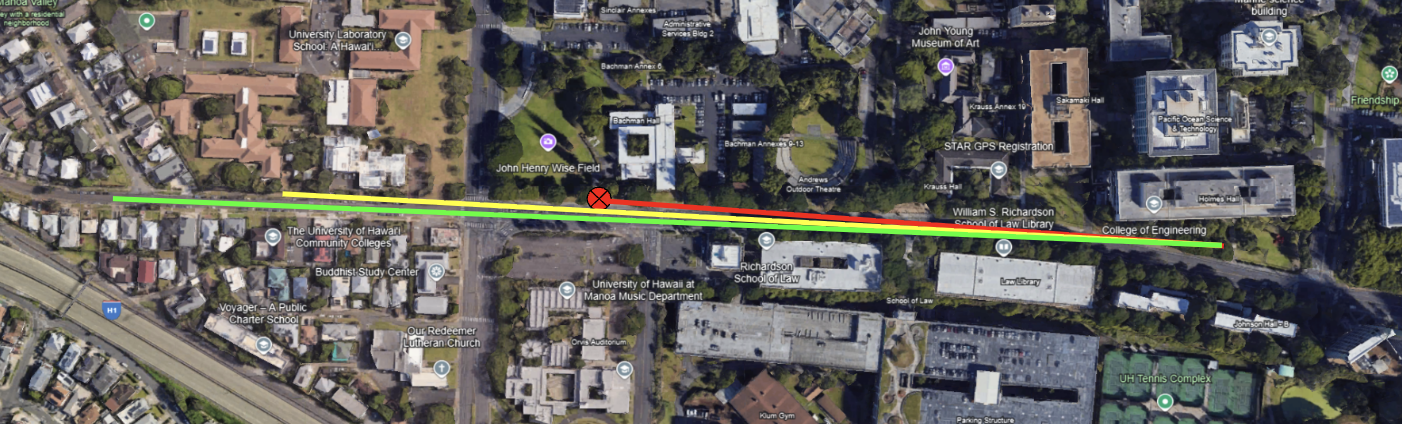
Specifically, I configured and set up XBee modules, including XBee3, S2C Pro, and 3 Pro. Among these, the 3 Pro module demonstrated the best performance. Testing involved two Arduino setups: one acting as a coordinator to receive packets and the other as a router to send packets. The packets were simulated within the Arduino for configuration and performance testing. Once all teams have completed their designated tasks, we will transition to using the actual data collected by the hardware team’s sensor modules.
If you are interested in the project, you can learn more at Smart Campus Energy Lab Wiki.